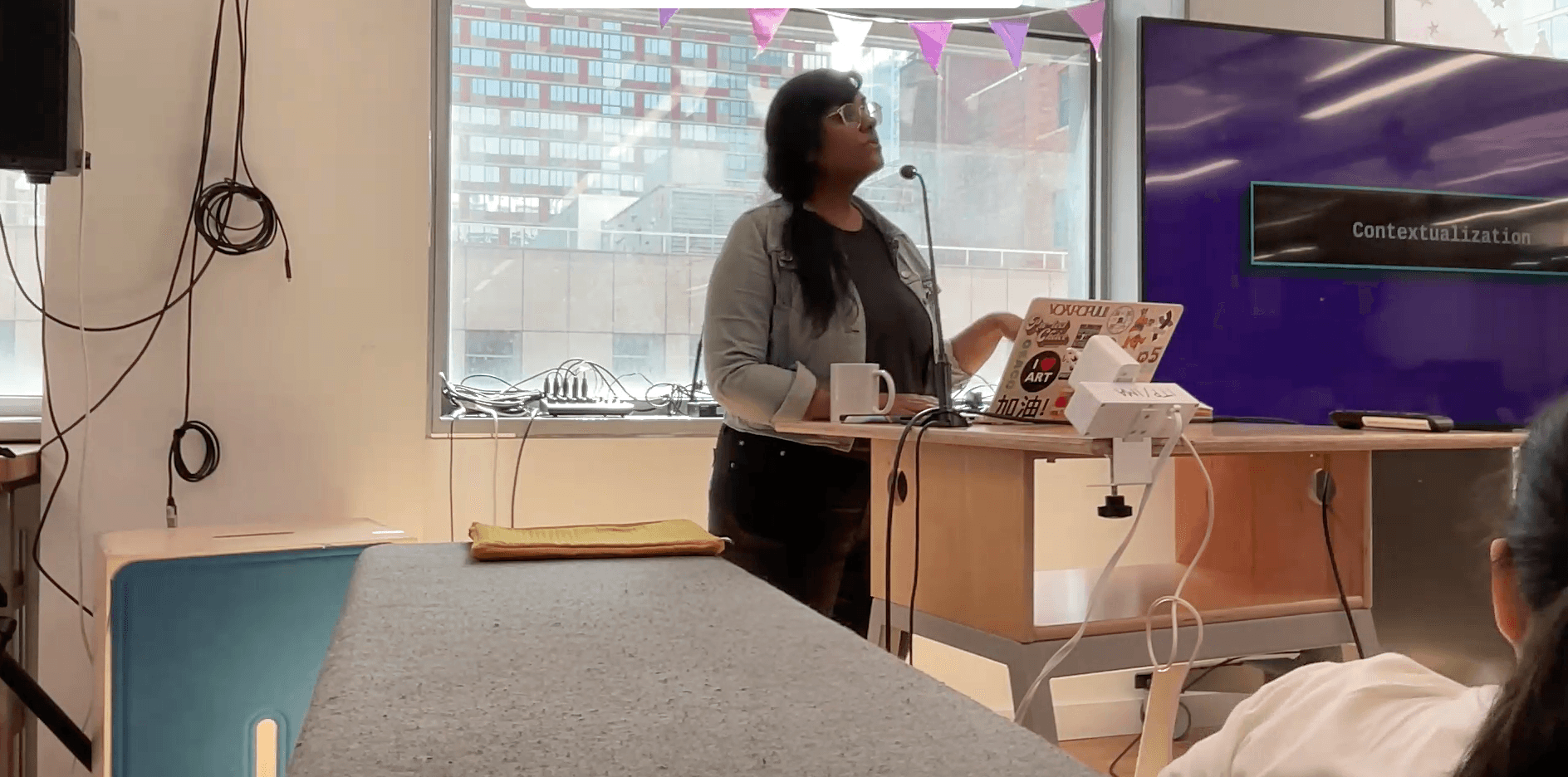
During Roopa’s talk, what resonated most was her point about Moore's Law and the fact that it's not actually a law, it’s just a target Gordon Moore set and then had the power to make real as a leader at Intel. That reframe hit me. It provided a clean example of how inevitable tech narratives get built after the fact by people who had gain to benefit from “rigging the system” the whole time. Once you see that, it's hard to unsee it.
That's basically Tufekci's whole argument in Chapter 5. She uses Aristotle's four causes to pull apart what technology actually contributes to an outcome: material, formal, efficient, final. And her point is that tech shows up in the material and formal causes but people are still the efficient and final causes: the ones doing the work and the ones with the reasons. Roopa's whole DIY framing is that same split in practice. Calling Moore's Law a "fantasy wish list" instead of a prophecy is her refusing to let the formal cause (the design decisions baked into the industry's roadmap) get mistaken for something inevitable and outside human hands.
The Spotify story with Kyle Macdonald landed the same way for me. The DM feature being unencrypted wasn't some neutral fact about how messaging works; it was a design choice shaped by whatever incentives were in the room when it got built. That's Tufekci's "Like" button argument almost exactly: Facebook didn't build a "Dislike" button not because it was technically hard, but because it didn't serve the people paying for ads. Macdonald didn't discover a flaw in the technology so much as expose the decisions sitting behind it.
Where I think Roopa pushes past Tufekci is that she's not just diagnosing this from the outside and how DIY is her answer to it. She’s actually trying to build the muscle for doing something with her work, whether that be in the studio, in the classroom, or in in-person the workshops like “Conversations.” I thoroughly enjoyed hearing her perspective.
© 2019-2026 Marshall Creative Group LLC
Studio