
Links to presentation, Figma exercise, workshop v1 and workshop v2 (what we ran with)
__________________________________________________________________________
Our workshop was on Artistry and Algorithms, with our driving question being: What is a good algorithm?
Let’s walk through the journey that brought us to this specific theme.
When we set out to create this workshop, we started from the key topics described for artistry and algorithms week:
Computational Art
Creative Expression
Agency, Automation & Prediction
Our first instinct was to take these topics and tie them back to our workshop title: what an algorithm is, how to leverage them for creativity, and advanced topics in algorithmic expression. We wanted workshop participants to leave feeling more comfortable with algorithms and how they might apply them to their creative work. This led to the following initial learning objectives:
[Driven by Nahil] Understand what algorithms are
[Driven by James] Develop a sense of what computational art is and what forms this could take
[Driven by Tiffany] Understand technical and personal considerations of algorithms: relationship to agency, prediction, and automation.
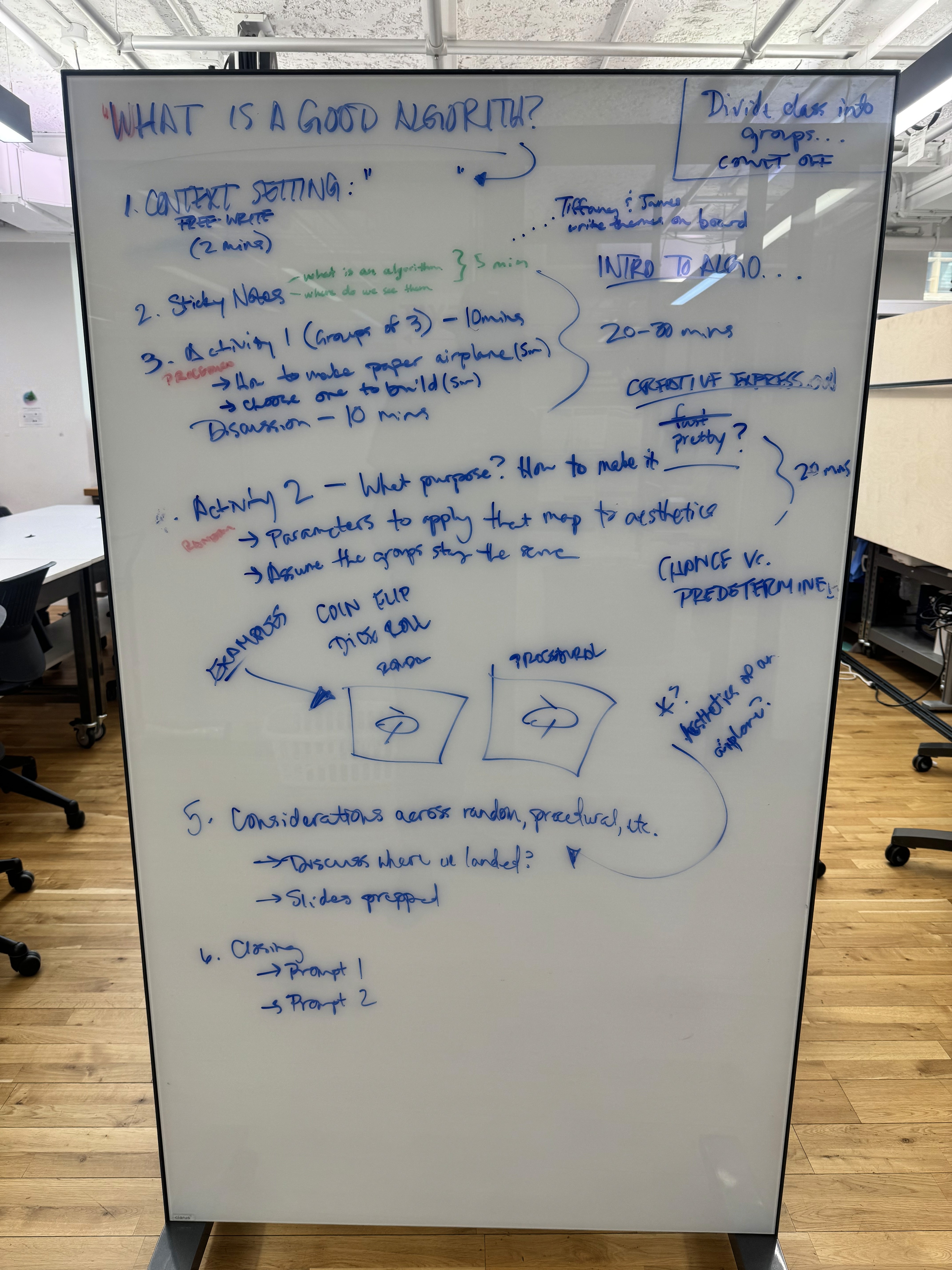
To start, since we were working over the weekend, we each developed our own sections and planned to regroup on Monday. This independent workshop development was evident in our check-in with Craig and Chrissy, whose feedback led to the following key adjustments in approach:
Cutting down content: we were covering intro to algorithms, examples of computational art, the potential impacts of deterministic/generative algorithms, and reflecting on one’s personal relationship to randomness and offloading work to algorithms. We kept the fundamentals of algorithms and focused on deterministic vs. random outputs, leaning on the fact that the class was already assigned reading on visualizing algorithms and would come into the workshop with a base understanding of how algorithms can be creatively visualized.
Hands-on activity: to keep participants engaged, we looked for tactile activities that groups could collaborate on together. We decided to run a paper plane folding activity.
Throughline across all sections: we looked for core themes and activities that made each of the three sections feel cohesive. We referenced the same paper plane example across all activities, and sought for all sections to tie back to a core workshop theme.
And to figure out what that core workshop theme was, we reflected on the learning objectives for this workshop. We did want people to still understand what algorithms were, and we felt that it was important to keep the personal reflection on our individual relationships to/with algorithms. In the spirit of cutting down workshop content to keep it concise and runnable in 90 minutes, we decided to specifically focus on process and chance from the course reading to guide us toward the personal reflection, with the line of thinking looking something like this:
I want to interrogate how/why I’d use algorithms.
First, I want to understand what an algorithm is.
Then, I want to understand what it could do—the focus here being the execution of instructions, and how this might be deterministic or more random.
Finally, I want to understand when I’d want to lean towards more/less predictable outcomes—and that I don’t necessarily need an algorithm to execute instructions on my behalf if I don’t want that.
This personal reflection note that the workshop ended on led us to this subjective question we felt was important for people to think on: what is a good algorithm?
Following the What is a good algorithm? theme, our workshop had three distinct sections that all tied back to this central question. We leaned into discussion and group activities to get people to think about algorithms extending beyond the computer, prioritizing physical and real-world examples with a few ties to creative computation.
Section 1: Algorithms | Section 2: Outcomes | Section 3: Considerations | |
|---|---|---|---|
Goal | Reflect on what even is an algorithm and the components needed to be considered "good" | Reflect on the various type of algorithms and how they can also effect creative expression | Reflect on considerations for when to leverage algorithms for execution & randomness |
Activity | Airplane exercise, where each team was responsible for writing explicit instructions for the next group on how to make a paper airplane; they could use no pictures or gestures | Airplane exercise, where we asked each group to decorate a paper airplane using predetermined and/or random instructions to mimic the various types of algorithms | Figma/2x2 exercise, plotting what you want to do yourself vs. what you are ok offloading instructions for; what you want exact outcomes for vs. what you want more randomness for |
Discussion Questions |
|
|
|

The workshop went really well, and we received good feedback from the class. Everybody was engaged in the activities themselves, but the discussion questions also drove a lot of good dialog back and forth. There weren’t any surprises, and the workshop went off as planned; I think that was a testament to the planning of it. The only thing that I would think of changing is supplying the teams with actual dice to enhance that feeling of randomness during Activity 2. The crumbled up pieces of paper that denoted “Heads” or “Tails” did the trick though.

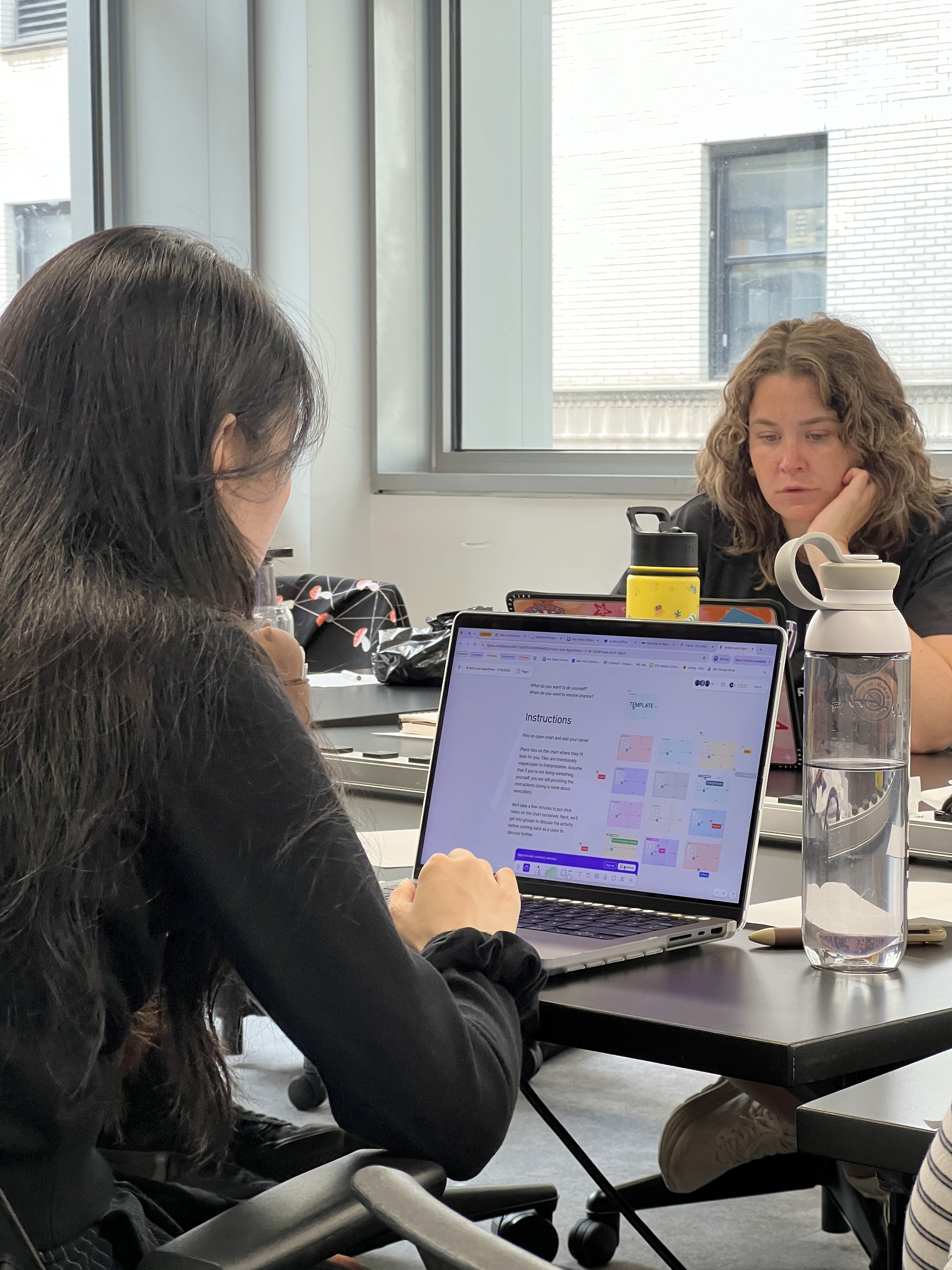
The biggest takeaway from planning and creating the workshop is not to cram too much information into such a short amount of time. When we first planned our workshop, we had really robust activities that would’ve likely taken up way too much time, so being intentional about what it is we wanted to highlight and keeping it light in terms of content was the way to go. I think each of us had good ideas for our section, but pairing them down to fit into one another while also keeping within the bounds of 60-90 minutes was the challenge.
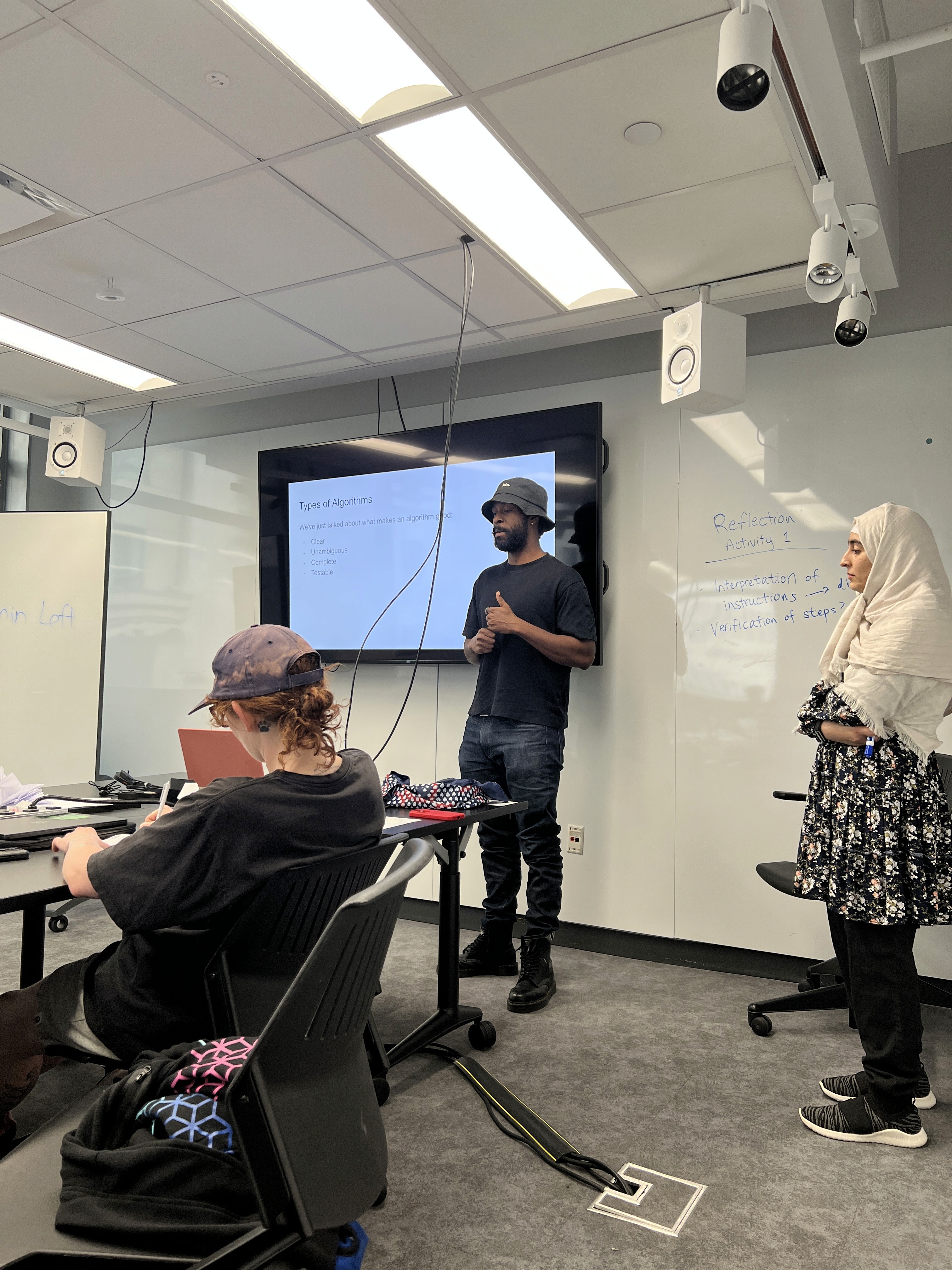
Overall, we wanted the class to understand what makes a good algorithm, what the different types of algorithms are, and some considerations for when to leverage algorithms for execution & randomness. Based on Thursday’s workshop and the response received, I would say the objectives were achieved.
© 2019-2026 Marshall Creative Group LLC
Studio