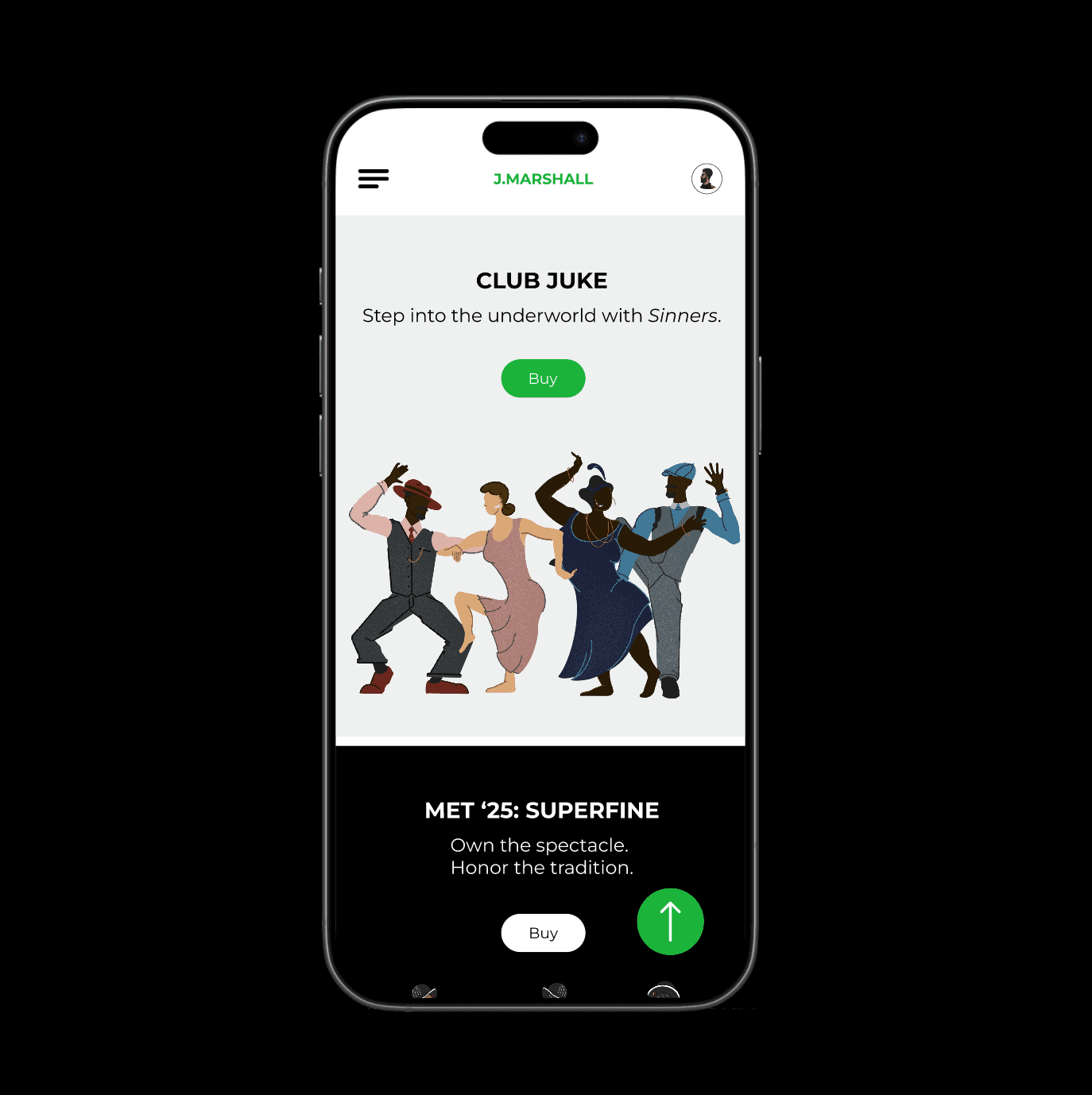
This project began as an interface design exploration asking:
How might a digital platform help viewers discover, navigate, and engage with visual artwork in ways that feel intentional rather than algorithmic?
As both a product manager and visual artist, I wanted to design a system that treats creative work as content worth careful presentation—not just thumbnails in an infinite scroll. I used my own artwork as the subject matter, creating a marketplace-like interface that allows viewers to explore illustration, 3D work, generative systems, and visual narratives through multiple discovery pathways.
This dual purpose—showcasing interface thinking while displaying creative work—mirrors my broader interest in how designed systems shape the experience of encountering art, ideas, and cultural objects.
Context & Constraints
Most platforms default to chronological feeds or algorithmic recommendations—optimized for engagement rather than contemplation. I wanted to explore an alternative model where:
Artwork is organized thematically (by project, medium, or narrative)
Discovery happens through browsing rather than passive consumption
Context and provenance matter (showing process, inspiration, related works)
Viewers control their own journey through the collection
Using my own creative work as content allowed me to test these ideas without constraints from external stakeholders, while also creating a functional showcase that integrates my product and creative practices.
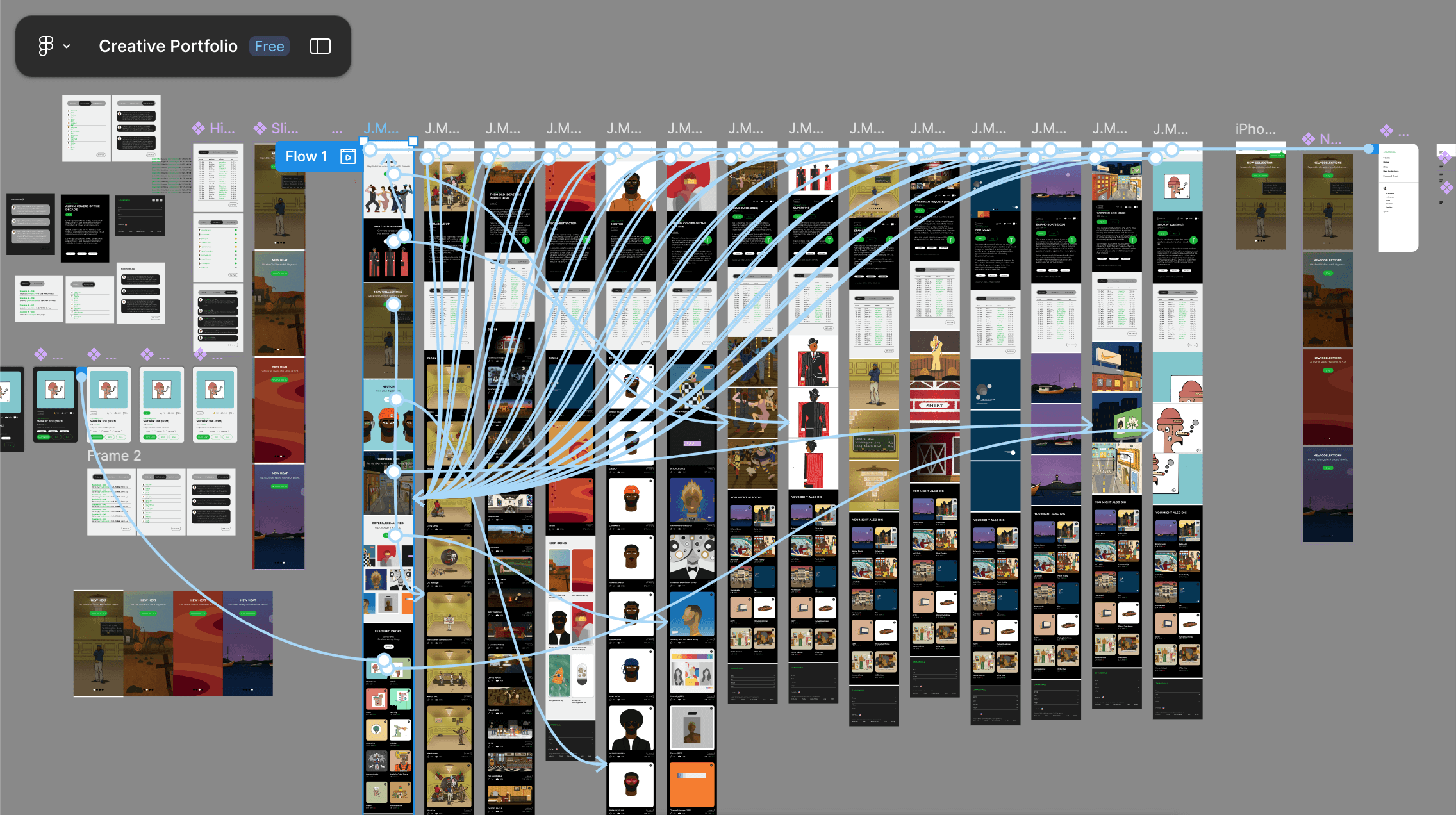
Portfolio as Product
Rather than presenting my creative work in static case study format, I designed the marketplace to function as both an interface exploration and an interactive portfolio. This allows viewers to experience my product thinking and creative work simultaneously—treating the portfolio itself as a designed system rather than a document.
Reflection
This project clarified several things about how I approach design problems:
Meta-design as research:
Building a system to showcase my own work forced me to think critically about what information matters when encountering unfamiliar artwork. What builds trust? What invites deeper exploration? What feels overwhelming versus helpful? Using my own creative projects as content made these questions tangible rather than theoretical.
Content as variable:
Using real artwork (rather than placeholder images) revealed how content diversity affects information architecture. Some illustrations needed narrative sequencing; 3D renders required interactive controls; generative character systems needed to show variation. The interface had to flex without breaking, which pushed me to design for adaptability rather than rigid templates.
Self-directed exploration:
This project reinforced my interest in designing for open-ended discovery rather than goal-oriented tasks—a theme that runs through my other work (ambient interaction in Elote Man, narrative navigation in Cowboy Carter). How do we design systems that support contemplation rather than conversion?
Systems shape interpretation:
The same artwork feels different when presented as a grid, a carousel, or a full-screen detail page. Design decisions about layout, sequencing, and information disclosure don't just affect usability—they author meaning. This insight connects directly to my interest in how interactive systems shape whose stories are legible and how cultural objects are understood.
More broadly, this exploration deepened my interest in Human-Computer Interaction by highlighting the gap between technically functional interfaces and cognitively meaningful ones. Designing for a creative portfolio underscored the importance of mental models, curatorial logic, and trust—areas that extend beyond visual design into research, behavioral theory, and evaluation.
This project represents a stepping stone toward understanding how to design systems that support curatorial thinking at scale, a challenge relevant to museums, digital archives, creative platforms, and any interface where discovery and interpretation matter as much as access. It also demonstrated that my product management skills and creative practice aren't separate—they inform and strengthen each other.
Ready for what’s next?
Let’s talk about your next project—no pressure, just conversation.
Get in touch
© 2019-2026 Marshall Creative Group LLC
Studio